

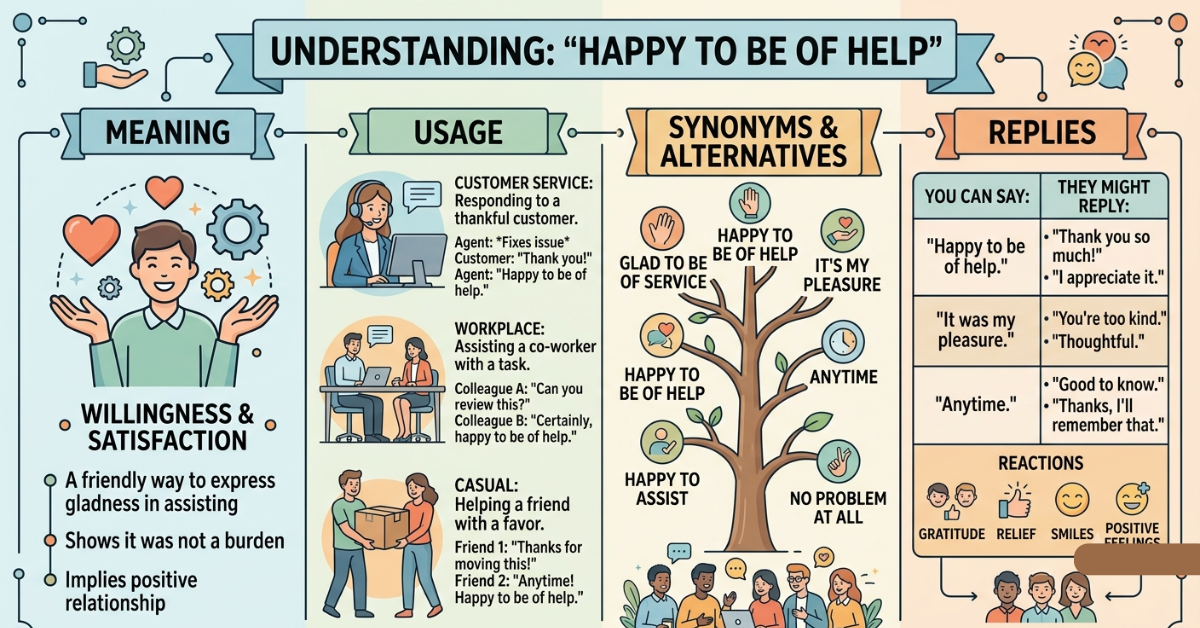
Have you ever replied to someone with a polite “Happy to be of help” and wondered whether it sounds warm, formal, or just a little old-fashioned? The phrase is a simple but powerful way to show kindness, confidence, and willingness to support someone. In this guide, we will break down the meaning, show when to use it, and share better alternatives for different situations.
What Does “Happy to Be of Help” Mean?
The phrase means “I’m glad I could assist you” or “I was glad to help.” It is a courteous response used after giving support, answering a question, solving a problem, or offering guidance.
It expresses two things at once:
- You were willing to help
- You feel good about having done so
In everyday conversation, It is often used in customer service, emails, professional settings, and polite personal exchanges. It sounds respectful and positive without being too casual.
A simple example
Person A: “Thanks for explaining that.”
Person B: “Happy to be of help.”
In this exchange, the speaker is politely saying that helping was no trouble and they are pleased to have been useful.
Happy to Be of Help Meaning in Daily Use
The meaning becomes clearer when you compare it with similar expressions. It is not just about helping; it is about being pleasant, cooperative, and considerate while doing so.
You might hear it in situations like these:
- A colleague explains a process to a teammate
- A store employee helps a customer find a product
- A teacher answers a student’s question
- A friend gives advice and wants to sound polite
Because the phrase is friendly but slightly formal, it works especially well when you want to sound professional and respectful.
Is “Happy to Be of Help” Formal or Casual?
This phrase sits in the middle. It is not extremely formal, but it is more polished than casual expressions like “no problem” or “sure thing.”
Best used in:
- Professional emails
- Workplace conversations
- Customer support replies
- Polite written responses
Less common in:
- Very casual texting
- Fast back-and-forth conversations with close friends
- Informal social media chats
If you are writing to a client, manager, or customer, it can sound thoughtful and well-mannered. In casual speech, though, it may feel slightly stiff compared with simpler alternatives.
When Should You Use This Phrase?
Use happy to be of help when you want to sound:
- Polite
- Helpful
- Professional
- Warm without being too familiar
It works best after someone thanks you or acknowledges your support.
Examples:
- “Happy to be of help. Let me know if you need anything else.”
- “I’m happy to be of help anytime.”
- “Happy to be of help with your project.”
This phrase is especially useful in customer-facing roles because it leaves a positive impression and shows that service mattered to you.
Better Alternatives to “Happy to Be of Help”
Even though the phrase is useful, you may not want to repeat it too often. Here are some natural alternatives depending on the situation.
Polite and professional alternatives
- Glad I could help
- Happy to assist
- It was my pleasure
- I’m glad I could be of assistance
- Always happy to help
More casual alternatives
- No problem
- Anytime
- Sure thing
- Of course
- Glad to help
More warm and personal alternatives
- I’m always here if you need anything
- It was great to help
- Happy I could make things easier
- Glad I could support you
Choosing the right option depends on your tone, relationship, and setting. A client email and a text to a friend should not sound exactly the same.
Common Mistakes People Make
People sometimes use the phrase correctly but in a way that feels awkward or overdone. Here are a few things to avoid.
1. Overusing it in one conversation
If you repeat happy to be of help too often, it can sound robotic. Mix it with other natural phrases.
2. Using it in very casual settings
Among friends, “happy to be of help” may sound too formal. “No problem” or “anytime” usually fits better.
3. Making it sound forced
The phrase should sound sincere. If your tone is cold or rushed, the words lose their warmth.
Real-World Examples of “Happy to Be of Help”
Here are a few practical examples showing how the phrase works in different contexts.
Email example
“Thank you for reaching out. I’ve shared the details below and am happy to be of help if you have any further questions.”
Workplace example
“Happy to be of help. I can review the file again if needed.”
Customer service example
“We’re happy to be of help and appreciate your patience.”
Personal example
“I’m happy to be of help with your presentation if you want feedback.”
These examples show that the phrase is flexible, but it still keeps a courteous and professional tone.
Why This Phrase Works So Well
The reason is so effective is that it sounds positive without being pushy. It tells the other person that helping was welcome, not a burden.
That matters because good communication is not only about solving a problem. It is also about making the other person feel respected and supported.
This phrase works well because it:
- Softens the tone
- Shows goodwill
- Keeps the conversation polite
- Encourages future communication
Key Takeaways
- It is polite, warm, and often slightly formal.
- It is commonly used in workplace, service, and email settings.
- You can replace it with simpler options like “glad to help” or “anytime.”
- The best phrase depends on the tone and relationship.
FAQs About “Happy to Be of Help”
1. What does happy to be of help mean?
It means you were glad to assist someone and that helping was a positive experience for you. It is a polite and friendly response after giving support.
2. Is happy to be of help correct English?
Yes, it is correct English. The phrase is commonly used in professional and polite communication, especially in emails and customer service.
3. Is happy to be of help formal?
It is moderately formal. It sounds more polished than casual replies like “no problem,” but less stiff than very formal business language.
4. Can I say happy to be of help in an email?
Yes, it works very well in emails. It is especially useful when replying to clients, coworkers, teachers, or customers in a respectful tone.
5. What can I say instead of happy to be of help?
You can say “glad I could help,” “happy to assist,” “anytime,” or “it was my pleasure.” The best option depends on whether you want to sound formal or casual.
6. Is happy to be of help used in customer service?
Yes, it is very common in customer service. It sounds courteous, reassuring, and professional, which makes it useful in support messages and service replies.
Conclusion
The phrase is a simple expression, but it carries a lot of politeness and goodwill. Understanding helps you use it naturally in emails, work conversations, and service settings without sounding forced.
The main thing to remember is this: it is best when you want to sound respectful, helpful, and warm. Try using it in the right context, then explore other natural alternatives so your communication feels smooth and human.