

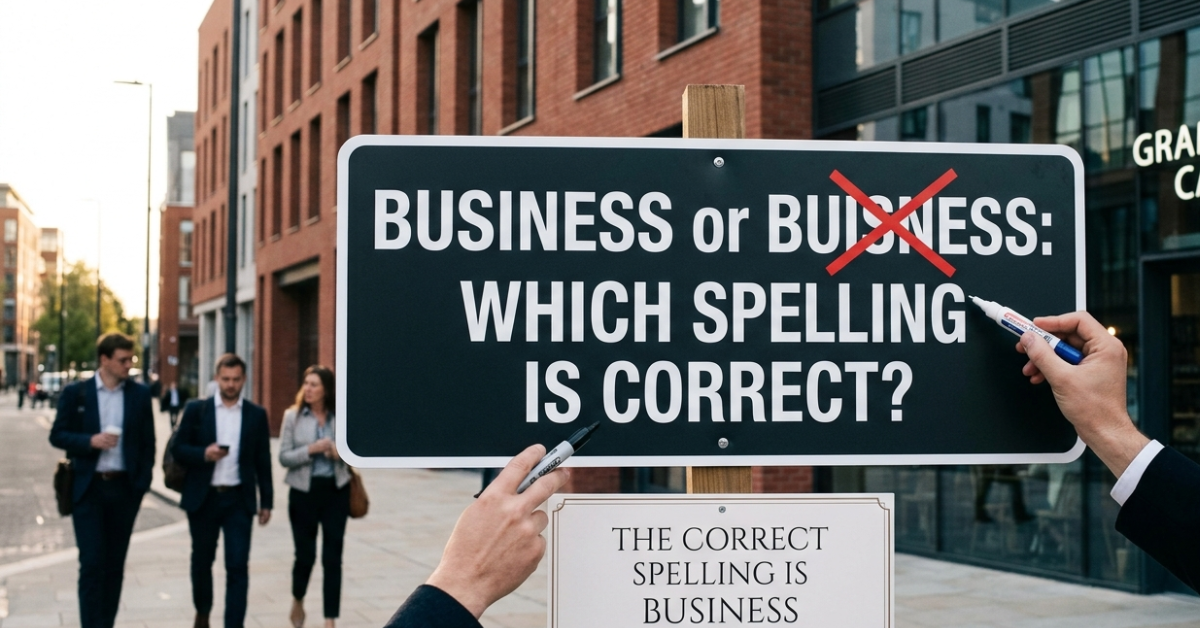
Have you ever typed “buisness” into a document, only to see a red underline appear? You’re not alone. Thousands of people search for buisness or business every month because this is one of the most commonly misspelled words in English.
The confusion usually comes from the placement of the letters i and u, but only one spelling is accepted in standard English. In this guide, you’ll discover the correct spelling, why people make this mistake, where the word comes from, practical memory tricks, common examples, and answers to frequently asked questions. By the end, you’ll never hesitate over this word again.
What Is the Correct Spelling: Buisness or Business?
The correct spelling is business.
Buisness – Incorrect
Business – Correct
Whether you’re writing an email, creating a resume, preparing a school assignment, or launching a company website, business is the only accepted spelling in English dictionaries.
Example Sentences
- She started a successful business last year.
- My father owns a family business.
- They studied business administration in college.
- Good customer service helps every business grow.
Writing buisness in professional or academic settings can make your work appear less polished.
Why Do People Spell It “Buisness”?
This mistake is surprisingly common because English spelling doesn’t always match pronunciation.
Several factors contribute to the confusion:
- People pronounce the word quickly, making the vowel sounds less noticeable.
- Many English words contain the letter combination “ui.”
- Typing fast often causes the letters to be reversed.
- Learners rely on pronunciation instead of memorizing spelling.
Since business is used frequently in work, education, finance, and entrepreneurship, it’s one of the most searched spelling questions online.
The Meaning of Business
A business generally refers to an organization, profession, or activity that involves providing goods or services in exchange for money.
However, the word has several meanings depending on the context.
1. A Company
A business can refer to an organization that sells products or services.
Example:
“My sister owns an online business.”
2. Work or Profession
It can describe someone’s occupation or professional activities.
Example:
“He travels frequently for business.”
3. A Matter or Concern
Sometimes it means something that requires attention.
Example:
“That’s none of your business.”
The Origin of the Word Business
The word business comes from the Old English word bisignis, meaning:
- Care
- Occupation
- Anxiety
- Being occupied
Over time, its meaning evolved into commercial activity, trade, and professional work. Although the pronunciation changed, the spelling remained relatively stable, which explains why it doesn’t sound exactly like it’s written.
Why “Buisness” Is Incorrect
English dictionaries, style guides, educational institutions, and grammar experts recognize only one standard spelling.
Incorrect spellings include:
- buisness
- bussiness
- busines
- buisiness
- buisnes
Only business is grammatically correct.
Using incorrect spelling may affect:
- Job applications
- Academic papers
- Professional emails
- Marketing materials
- Social media credibility
- Business proposals
Easy Ways to Remember the Correct Spelling
If you often mix up buisness or business, these memory tricks can help.
Think of “Busy”
Notice that business begins with busy.
Busy → Business
Since businesses are usually busy places, this association makes the spelling easier to remember.
Remember the Letter Order
The correct order is:
B-U-S-I-N-E-S-S
Not:
B-U-I-S-N-E-S-S
Pay attention to the placement of S before I.
Practice Typing It
Repeatedly writing the word correctly trains your brain.
Try writing:
- business plan
- business owner
- business meeting
- business strategy
Read More Professional Content
Reading books, articles, and newspapers naturally reinforces correct spelling through repeated exposure.
Common Business-Related Terms
Learning related vocabulary also helps reinforce the correct spelling.
| Term | Meaning |
| Business plan | A document outlining company goals |
| Small business | A privately owned company |
| Business owner | Person who owns a company |
| Business management | Managing company operations |
| Business administration | Study of organizational management |
| Business model | How a company earns money |
| Business strategy | Long-term growth plan |
| Business development | Creating growth opportunities |
Examples in Everyday English
Here are common situations where the word appears.
At Work
“Our business has grown by 20% this year.”
In School
“She studies business management.”
During Travel
“He is traveling for business.”
In Conversation
“It’s none of my business.”
Online
“We’re launching a new online business.”
Business vs Company
Although often used interchangeably, they are not exactly the same.
| Business | Company |
| Refers to commercial activity or organization | Refers to a legal entity |
| Can describe work in general | Specifically refers to an incorporated organization |
| Broader meaning | More formal meaning |
Example:
“I started a business.”
“My company has 50 employees.”
Common Grammar Mistakes
People don’t just misspell business—they also misuse it in sentences.
Incorrect
- I have a buisness.
- She owns a bussiness.
- He’s studying buisness administration.
Correct
- I have a business.
- She owns a business.
- He’s studying business administration.
Where Correct Spelling Matters Most
Using the correct spelling is especially important in professional settings.
Resume
Recruiters notice spelling mistakes immediately.
Cover Letter
Correct spelling reflects attention to detail.
Emails
Professional communication requires accurate spelling.
School Assignments
Teachers often deduct marks for repeated spelling errors.
Websites
Misspellings can reduce trust and credibility.
Marketing Materials
Customers are more likely to trust polished, error-free content.
Practical Tips to Avoid This Mistake
If you regularly confuse buisness or business, follow these habits:
- Turn on spell check.
- Proofread before publishing.
- Read your writing aloud.
- Practice difficult words regularly.
- Keep a personal list of commonly misspelled words.
- Use grammar-checking software when editing important documents.
Even experienced writers rely on proofreading tools.
Commonly Confused Words
If you struggle with business, you may also confuse these words:
| Incorrect | Correct |
| recieve | receive |
| definately | definitely |
| seperate | separate |
| occured | occurred |
| goverment | government |
| buisness | business |
Learning these together improves your overall writing accuracy.
Why Correct Spelling Builds Credibility
Correct spelling isn’t just about grammar—it influences how others perceive you.
People are more likely to trust writing that is:
- Accurate
- Professional
- Easy to read
- Error-free
Whether you’re applying for a job, writing an email, or promoting a brand, spelling contributes to a strong first impression.
Key Takeaways
- Business is the only correct spelling.
- Buisness is a common misspelling.
- The correct letter order is B-U-S-I-N-E-S-S.
- The word refers to commercial activity, work, or a company.
- Correct spelling improves professionalism and credibility.
- Simple memory tricks and regular practice can help you avoid future mistakes.
Frequently Asked Questions
Is “buisness” ever correct?
No. Buisness is always incorrect. Standard English recognizes only business as the proper spelling.
Why do so many people write “buisness”?
People often reverse the letters u and i because the word’s pronunciation doesn’t clearly reflect its spelling. Fast typing and habit also contribute to the mistake.
How do you spell business correctly?
The correct spelling is:
B-U-S-I-N-E-S-S
Remember that the S comes before the I.
What does business mean?
Business refers to commercial activity, a company, professional work, or a matter requiring attention, depending on the context.
Is business a noun?
Yes. Business is primarily a noun. It refers to an organization, profession, trade, or activity involving goods or services.
How can I remember the correct spelling?
A simple trick is to think of the word busy inside business. Since companies are usually busy, this association helps many people remember the correct spelling.
Conclusion
If you’ve ever wondered about buisness or business, the answer is simple: business is the only correct spelling. While the mistake is common, using the proper spelling is essential in professional communication, academic writing, and everyday English.
Understanding the meaning, origin, and correct usage of business not only improves your writing but also strengthens your credibility. Keep practicing, proofread your work, and use the memory tips shared in this guide. The next time you type the word, you’ll know exactly how to spell it with confidence.