

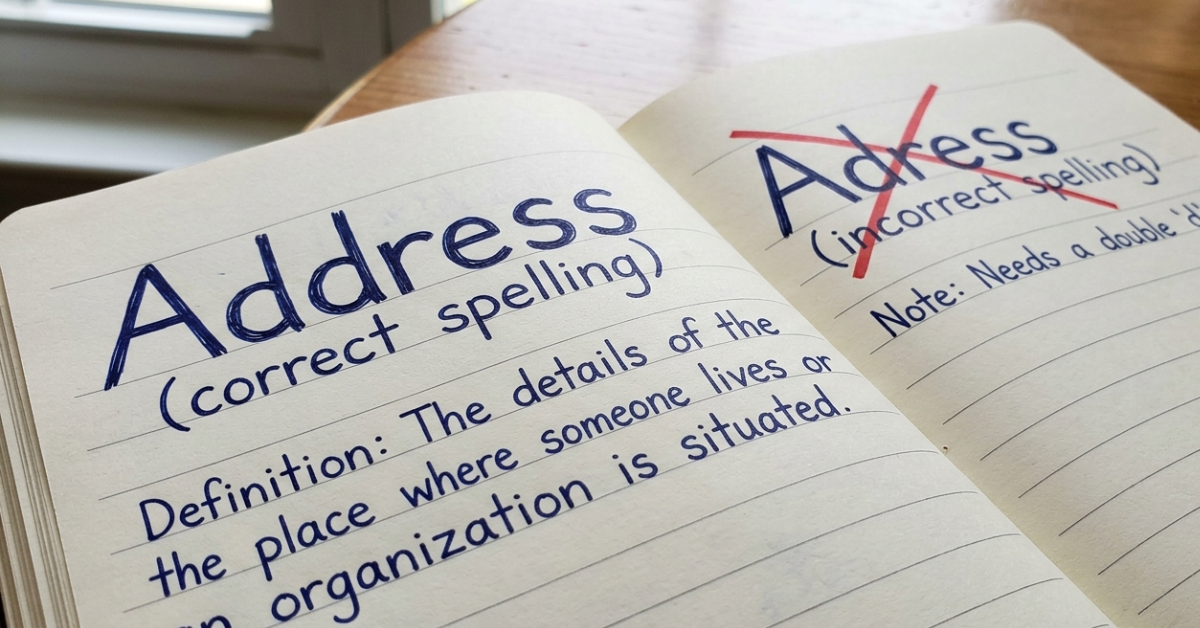
Have you ever paused while typing an email or filling out an online form, wondering whether it’s adress or address? You’re not alone. This is one of the most common English spelling mistakes because the two words look almost identical at first glance.
The good news is that the answer is simple: address is the correct spelling, while adress is a spelling mistake in modern English. In this guide, you’ll learn why the confusion happens, how to remember the correct spelling, real-life examples, grammar tips, and answers to the most frequently asked questions.
The Short Answer
If you’re deciding between adress or address, here’s the rule:
Address = Correct spelling
Adress = Incorrect spelling
Whether you’re writing an email, mailing a package, filling out official documents, or referring to a speech, address is always the proper spelling in English.
What Does “Address” Mean?
The word address has several meanings depending on the context. That’s one reason it’s used so frequently in everyday English.
1. A Physical Location
This is the most common meaning.
Examples:
- Please write your home address on the application.
- I forgot the restaurant’s address.
- Can you send me your office address?
In this context, an address identifies where someone lives or where a place is located.
2. An Email Address
Today, the word is just as common online.
Examples:
- Enter your email address.
- My work email address has changed.
- Double-check the address before sending the message.
3. To Speak to Someone
As a verb, address means to speak directly to someone or a group.
Examples:
- The CEO addressed the employees.
- She addressed the audience confidently.
- The teacher addressed the students before the exam.
4. To Deal With a Problem
It can also mean handling or solving an issue.
Examples:
- We need to address the customer’s complaint.
- The company addressed the security concerns.
- The government addressed the housing shortage.
Why Do People Write “Adress”?
The confusion usually comes from English spelling patterns.
Many English words contain only one d after a vowel, so people naturally assume adress follows the same pattern.
However, address is an exception because it contains:
- Two d’s
- Two s’s
Correct spelling:
A D D R E S S
Incorrect spelling:
A D R E S S
This small missing letter is enough to make the word incorrect.
Easy Trick to Remember the Correct Spelling
One simple memory trick is:
Address has two destinations.
Think of it as needing:
- 2 Ds
- 2 Ss
Visualize it like this:
ADD + RESS
The word almost begins with ADD, making it easier to remember.
Adress vs Address: Side-by-Side Comparison
| Feature | Address | Adress |
| Correct English spelling | Yes | No |
| Found in dictionaries | Yes | No |
| Used in formal writing | Yes | Never |
| Used in emails and documents | Yes | Incorrect |
| Accepted in exams | Yes | Marked wrong |
Examples of Correct Usage
Here are examples you’ll commonly see.
Talking About a Location
- What’s your home address?
- The package was sent to the wrong address.
- Please update your mailing address.
Talking About Email
- Enter your email address carefully.
- Verify your email address.
- My business address has changed.
Speaking to Someone
- The principal addressed the parents.
- The president addressed the nation.
- She addressed every question politely.
Solving a Problem
- We should address the issue immediately.
- The company addressed customer concerns.
- Let’s address this misunderstanding before moving forward.
Common Mistakes to Avoid
Many learners make these spelling errors:
Incorrect: Adress
Correct: Address
Incorrect: Email adress
Correct: Email address
Incorrect: Home adress
Correct: Home address
Incorrect: Postal adress
Correct: Postal address
Always proofread documents before submitting them.
Is “Adress” Ever Correct?
In modern English, no.
Some people wonder whether adress exists as an older spelling or in another variety of English.
The answer is straightforward:
- Modern British English uses address.
- Modern American English uses address.
- Canadian English uses address.
- Australian English uses address.
Across all major English-speaking countries, address is the accepted spelling.
Pronunciation of Address
The pronunciation changes slightly depending on how the word is used.
As a Noun
Address
Example:
“My address is 25 Green Street.”
As a Verb
Address
Example:
“The manager addressed the team.”
The spelling stays exactly the same.
Why English Learners Confuse These Words
Several factors contribute to this mistake.
Double Letters
English has many words with double consonants, making spelling difficult.
Examples include:
- Success
- Accommodation
- Necessary
- Address
- Committee
Fast Typing
Many people accidentally skip one of the “d”s while typing quickly.
Autocorrect Isn’t Perfect
Although spell check catches many mistakes, it isn’t available everywhere, especially in handwritten work or exams.
Words Commonly Confused with Address
Learning similar spelling challenges can improve your writing overall.
| Incorrect | Correct |
| Adress | Address |
| Recieve | Receive |
| Occured | Occurred |
| Untill | Until |
| Definately | Definitely |
| Seperate | Separate |
These are among the most frequently misspelled English words.
Tips to Always Spell Address Correctly
Here are practical ways to remember it.
- Think of ADD at the beginning.
- Remember it has two D’s and two S’s.
- Read your writing before sending it.
- Turn on spell check when possible.
- Practice typing the word several times.
With repetition, the correct spelling quickly becomes automatic.
When Is “Address” Used Most Often?
You’ll encounter this word almost daily.
Common situations include:
- Online shopping
- Job applications
- School forms
- Passport applications
- Banking documents
- Email registration
- GPS navigation
- Business correspondence
- Postal services
Because it’s so common, spelling it correctly is important for both professional and personal communication.
Address in Business Communication
In professional settings, accuracy matters.
Examples include:
- Company address
- Billing address
- Shipping address
- Office address
- Registered business address
Even a small spelling mistake can make documents appear less polished and professional.
Key Takeaways
- Address is the only correct spelling.
- Adress is always considered a spelling mistake in modern English.
- The word can refer to a location, an email, a speech, or dealing with a problem.
- Remember the spelling by thinking of ADD + RESS.
- Proofreading helps eliminate this common error.
Frequently Asked Questions
Is address spelled with one D or two?
It is spelled with two Ds and two Ss: address. Writing adress is incorrect in modern English.
Why do people type “adress” instead of “address”?
Most people accidentally leave out one “d” because English contains many words with only a single “d.” Fast typing and unfamiliarity with double-letter words also contribute to the mistake.
Is “email adress” correct?
No. The correct phrase is email address. Using email adress is a spelling error.
Is “adress” accepted in British English?
No. Both British and American English use the spelling address. The form adress is not considered correct in either variety.
How can I remember the correct spelling?
Think of the beginning of the word as ADD. Since you’re “adding” a location, remember it contains two Ds and ends with two Ss.
Can “address” be used as both a noun and a verb?
Yes. As a noun, it refers to a location or contact information. As a verb, it means to speak to someone or deal with an issue.
Conclusion
If you’ve been unsure about adress or address, the answer is clear: address is always the correct spelling, while adress is simply a common misspelling. Whether you’re writing an email, completing official paperwork, or communicating professionally, using the correct form helps your writing appear polished and credible.
By remembering the simple trick—ADD + RESS—you’ll avoid this mistake with confidence. Keep practicing common spelling challenges, proofread your work, and you’ll continue improving your written English with every sentence.