

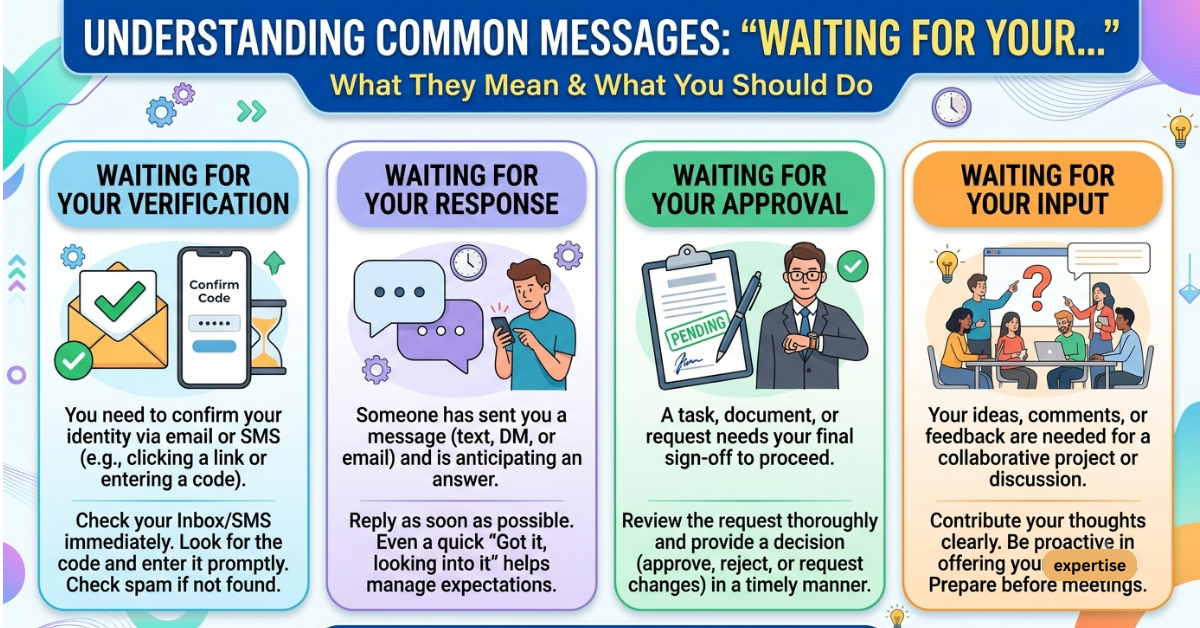
Have you ever seen a message like waiting for your response and wondered whether it sounds polite, urgent, or just plain vague? Or maybe you have come across phrases like screen connect waiting for your host or waiting for your order and wanted to understand what is actually happening behind the scenes. This phrase appears in everyday communication, customer support, online classes, and remote access tools, and its meaning changes depending on the context.
In this guide, you will learn what the phrase means, where it is commonly used, how to respond, and how to write it naturally in messages, emails, and support chats.
What “Waiting for Your Response” Really Means
At its simplest, waiting for your response means the other person is expecting a reply from you. It is commonly used in email, chat, business communication, and customer support.
It usually suggests one of these things:
- Someone has sent you a question and wants an answer.
- A decision is pending, and your reply will move things forward.
- The sender is politely reminding you that the conversation is paused until you respond.
This phrase is not rude by itself. In fact, it is often a professional and neutral way to ask for a reply without sounding too pushy.
Common Contexts Where This Phrase Appears
1. Emails and Professional Messages
In work communication, waiting for your response often appears when a colleague, client, or manager needs confirmation, approval, or feedback.
Example:
- “I’ve shared the final draft and am waiting for your response before sending it to the client.”
In this context, the phrase signals that action is blocked until the receiver replies.
2. Customer Service and Orders
When you see waiting for your order, it usually refers to a purchase that has not been delivered yet, or a system status that is still processing.
This can happen in:
- Food delivery apps
- Online shopping platforms
- Booking systems
- Pre-order status pages
It often means the platform is waiting for the next step, such as payment confirmation, packing, dispatch, or delivery assignment.
3. Online Classes and Group Chats
A phrase like waiting for your classmates to respond is very common in school, university, and group-project settings.
It usually means:
- A student has asked a question in a class group.
- A decision is waiting on feedback from others.
- The discussion cannot continue until multiple people reply.
This is especially common in WhatsApp groups, Google Classroom discussions, and project coordination chats.
4. Remote Access and Screen Sharing Tools
The phrase screen connect waiting for your host is usually related to remote support or screen-sharing software. It means the session has been started, but the person controlling the device or approving access has not joined yet.
In practical terms, it means:
- The connection is ready.
- The system is paused until the host accepts or joins.
- A support agent or user may need to click “allow,” “join,” or “approve.”
This is not a message about conversation. It is a technical status message.
Why These Messages Matter in Real Life
These phrases may seem small, but they help keep communication organized. They show that:
- A reply is needed.
- A process is on hold.
- A system or person is waiting for the next step.
- Responsibility has shifted to the other side.
That is why messages like waiting for your response are so common in professional and digital spaces. They are short, clear, and action-oriented.
How to Reply When Someone Is Waiting for Your Response
If someone is waiting on you, the best response is usually simple and direct. You do not need a long explanation unless the situation requires it.
Good reply examples
- “Thanks for your patience. I reviewed it and agree.”
- “I’m still checking a few details and will reply by today evening.”
- “Approved from my side.”
- “I will update you shortly.”
- “Sorry for the delay. Here is my response.”
Tips for replying well
- Reply as soon as possible, even if the full answer comes later.
- Acknowledge the delay if you were unavailable.
- Be specific about next steps.
- Keep the tone polite and clear.
A short message is often better than no reply at all.
What to Do If You See “Waiting for Your Response” Often
If this message keeps showing up in your inbox, app, or team chat, it may mean one of two things: people are relying on you, or a system is paused until you act.
Here is how to handle it:
- Check the message carefully to see what is being asked.
- Decide whether the response is urgent, optional, or informational.
- Reply with a quick acknowledgment if you need time.
- Set reminders for important requests.
- In group settings, ask one clear follow-up question if anything is unclear.
This approach prevents miscommunication and keeps things moving.
When the Phrase Sounds Polite vs. Pressuring
The tone of the phrase depends on how it is used.
Polite usage
- “Just waiting for your response whenever you have a moment.”
- “Looking forward to your response.”
- “Please let me know your thoughts.”
These sound respectful and professional.
More urgent usage
- “Still waiting for your response.”
- “Need your response ASAP.”
- “Following up since I have not heard back.”
These may feel more forceful, especially if repeated too often. The key is to match the tone to the relationship and urgency of the situation.
Practical Examples in Different Situations
In email
“I shared the revised contract yesterday and am waiting for your response before moving ahead.”
In a class group
“I posted the assignment question, but I’m waiting for your classmates to respond before I finalize the notes.”
In online support
“The remote session shows screen connect waiting for your host, so the connection is active but not yet approved.”
In shopping
“Your app may say waiting for your order if the restaurant, warehouse, or courier has not completed the next step yet.”
These examples show how one idea can appear in very different contexts.
Key Takeaways
- Waiting for your response means someone expects a reply from you.
- Screen connect waiting for your host is a technical status meaning the host has not yet joined or approved the session.
- Waiting for your classmates to respond is common in school or group-project communication.
- Waiting for your order usually refers to a delivery or purchase status.
- A fast, polite reply is usually the best way to move things forward.
FAQ
What does “waiting for your response” mean?
It means the sender is expecting you to reply before the conversation or process can continue. It is common in emails, messages, and professional communication.
Is “waiting for your response” polite?
Yes, it is usually polite and neutral. It becomes more forceful only if repeated too often or used without context.
What does “screen connect waiting for your host” mean?
It usually means a remote access or screen-sharing session is ready, but the host has not joined or approved the connection yet.
Why does my app say “waiting for your order”?
This usually means the order is still being processed, prepared, or assigned for delivery. It can also mean the system is waiting for the next step in fulfillment.
How should I reply when someone is waiting for my response?
Reply clearly, even if the full answer is not ready yet. A short acknowledgment such as “I’m checking and will get back to you soon” is often enough.
What does “waiting for your classmates to respond” mean?
It means the group is expecting replies from classmates before a decision, discussion, or assignment can move ahead. It is common in school chats and group projects.
Conclusion
The phrase waiting for your response may look simple, but it shows up in many important places: emails, class groups, customer support, delivery apps, and remote access tools. Whether you see screen connect waiting for your host, waiting for your classmates to respond, or waiting for your order, the core idea is the same: something is paused until the next person or system action happens.
Understanding these phrases helps you respond faster, communicate better, and avoid confusion in everyday digital life. Apply the examples above, and the next time you see one of these messages, you will know exactly what it means and what to do next.:::