

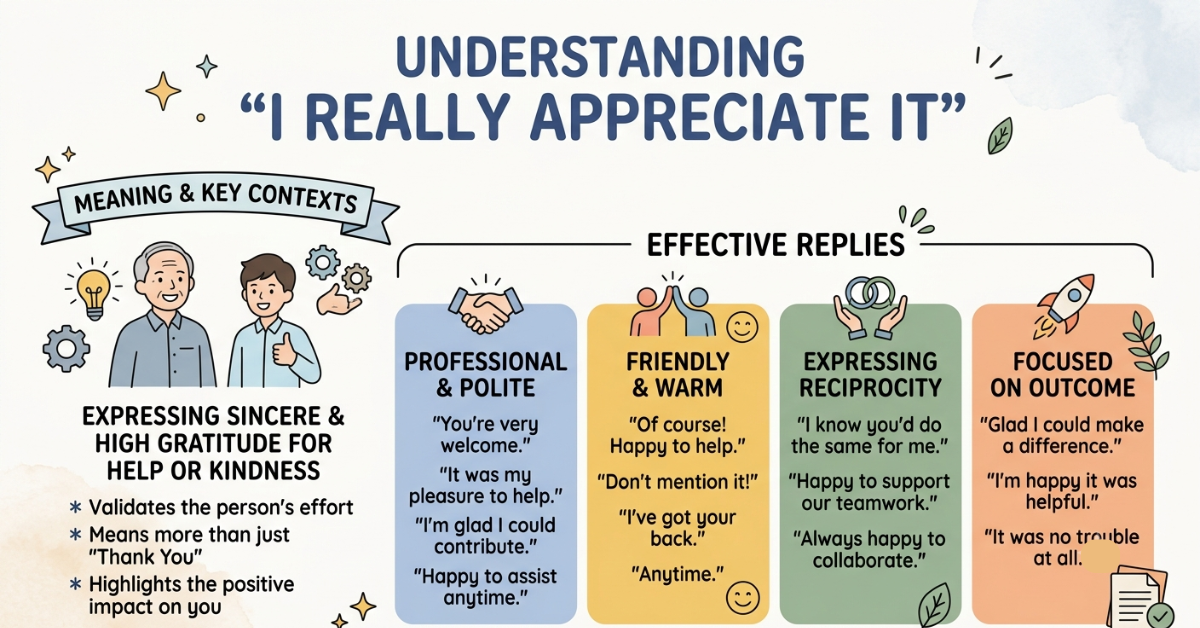
Have you ever thanked someone and wondered whether your words sounded warm enough, polite enough, or just a little too formal? That is exactly where i really appreciate it comes in. This simple phrase is one of the most natural ways to express genuine gratitude, and understanding its meaning can help you sound clearer, kinder, and more confident in everyday conversations.
In this guide, we will break down i really appreciate it meaning, explain when to use it, share useful alternatives, and show how to respond to i really appreciate it in a way that feels natural. You will also learn the difference between casual, professional, and heartfelt replies, so you can use the phrase with ease.
What Does “I Really Appreciate It” Mean?
At its core, i really appreciate it means “thank you sincerely” or “I value what you did for me.” It shows more warmth than a simple “thanks,” and it often suggests that the speaker genuinely recognizes effort, kindness, or support.
People use it when they want to express more than basic politeness. It can communicate:
- sincere gratitude
- emotional appreciation
- respect for someone’s time or effort
- acknowledgment of help or support
For example:
- “You stayed late to help me finish this project. I really appreciate it.”
- “Thanks for listening. I really appreciate it.”
When to Use “I Really Appreciate It”
This phrase works in both personal and professional settings. It is flexible, respectful, and easy to understand.
In everyday conversation
Use it with friends, family, neighbors, or anyone who has done something thoughtful for you.
Examples:
- “You picked up my package? I really appreciate it.”
- “Thanks for checking on me. I really appreciate it.”
In work or formal settings
It also works well in emails, messages, and workplace conversations when you want to sound courteous without being stiff.
Examples:
- “Thank you for your quick response. I really appreciate it.”
- “I really appreciate it meaning your support on this issue is valued.”
When you want to sound more sincere
If a simple “thanks” feels too small, this phrase adds warmth and depth. It is a good choice when someone has gone out of their way to help.
“Thank You, I Really Appreciate It” vs. “Thank You So Much, I Really Appreciate It”
These expressions are close in meaning, but they carry slightly different emotional tones.
Thank you, I really appreciate it
This is polite, direct, and balanced. It works in most situations.
Thank you so much, I really appreciate it
This version sounds more emotional and enthusiastic. It is useful when someone has done something especially kind, helpful, or generous.
In simple terms, thank you i really appreciate it is calm and sincere, while thank you so much i really appreciate it meaning feels a little stronger and more heartfelt.
Synonyms and Alternatives
If you want to avoid repeating the same phrase, there are many natural alternatives to. The best choice depends on the situation and tone you want to create.
Common synonyms
- I’m truly grateful
- I appreciate your help
- I’m very thankful
- That means a lot to me
- I’m grateful for your support
- Thanks a lot
- I value your help
- Much appreciated
More expressive alternatives
- I can’t thank you enough
- I’m deeply grateful
- That was very thoughtful of you
- Your help means a lot
- I sincerely appreciate it
These synonym options help you sound fresh while keeping your message warm and genuine.
How to Respond to “I Really Appreciate It”
Knowing how to respond to it is useful because the best reply is usually simple, kind, and natural. You do not need a long answer. A good response usually acknowledges the gratitude and keeps the conversation comfortable.
Casual responses
Use these with friends, family, or people you know well:
- “No problem.”
- “Anytime.”
- “Of course.”
- “Happy to help.”
- “Don’t mention it.”
Polite responses
These are good for work, clients, or more formal situations:
- “You’re very welcome.”
- “I’m glad I could help.”
- “It was my pleasure.”
- “Happy to assist.”
- “Glad it worked out.”
Warm responses
If you want to sound especially kind:
- “That means a lot, thank you.”
- “I’m happy I could be there for you.”
- “I really appreciate that.”
- “Glad I could make a difference.”
A useful rule is this: match the other person’s tone. If they sound formal, reply politely. If they sound relaxed, keep your response simple.
Real-Life Examples of the Phrase in Use
Here are a few everyday situations where the phrase feels natural.
At work
“Thanks for covering my shift. I really appreciate it.”
With a friend
“You checked in on me after the interview. I really appreciate it.”
In an email
“Thank you for sending the documents early. I really appreciate it.”
After a favor
“You helped me move all those boxes. I really appreciate it.”
These examples show that the phrase works best when you want to recognize effort, kindness, or time.
Common Mistakes to Avoid
Even though the phrase is simple, people sometimes use it in ways that sound awkward or overly repetitive.
1. Overusing it in one message
Saying it too many times can make your message feel unnatural. One clear expression is usually enough.
2. Using it when a shorter reply fits better
In very casual moments, “thanks” or “cheers” may sound more natural.
3. Forcing it into every sentence
The phrase should feel sincere, not mechanical. Keep it where gratitude is actually needed.
Key Takeaways
- i really appreciate it means sincere gratitude and recognition.
- It works well in both casual and professional conversations.
- thank you so much i really appreciate it meaning is stronger and more emotional than a basic thank you.
- There are many useful i really appreciate it synonym options for variety.
- The best reply to gratitude is often simple, warm, and natural.
FAQ
What does “I really appreciate it” mean?
It means you are genuinely thankful for something someone did. The phrase shows sincere gratitude and often communicates that their help or kindness mattered to you.
Is “I really appreciate it” formal or informal?
It can be both. The phrase is polite enough for professional settings but still natural in casual conversations.
How do you respond to “I really appreciate it”?
Simple replies like “You’re welcome,” “Anytime,” or “Happy to help” usually work best. In formal situations, “It was my pleasure” sounds especially polite.
What is another way to say “I really appreciate it”?
You can say “I’m truly grateful,” “I value your help,” “That means a lot,” or “Much appreciated.” The best option depends on how formal or emotional you want to sound.
Is “thank you so much, I really appreciate it” correct?
Yes, it is correct and commonly used. It sounds warmer and more expressive than a plain thank you.
Can I use “I really appreciate it” in an email?
Yes, it is very common in emails. It works well when thanking someone for help, a response, a favor, or their time.
Conclusion
It is a small phrase with a big impact. It helps you express gratitude in a way that feels sincere, respectful, and human. Whether you are writing a message, sending an email, or replying to someone’s kind words, this phrase gives you a simple way to sound thoughtful and clear.
The more naturally you use it, the easier it becomes to communicate warmth and appreciation in everyday life. Try using the examples and alternatives above, and your responses will feel more confident and genuine.